

The Graduate Program in Materials Technology and Industrial Processes is affiliated with Feevale's Institute of Creative and Technological Sciences (ICCT). It conducts advanced studies in the concentration area of technological development in materials and has two research lines: optimization of industrial processes and development and characterization of materials.
For this reason, the concentration area requires a multidisciplinary approach based on chemistry, physics, and engineering. It therefore aims to train professionals who combine investigative practices to solve problems and transfer technological developments and innovations to the productive sector through their qualifications.
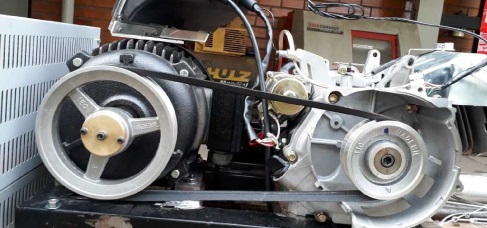
Concentration Area: Technological Development in Materials
Drawing on an interdisciplinary approach that brings together Engineering, Chemistry, Mathematics, Physics, and Health Sciences, the concentration area aims to train professionals who apply advanced investigative practices to solve problems through their expertise in technological development and innovation in industry and society.
Objectives
- Train materials professionals qualified to work in industry and academia;
- Continuously develop an interdisciplinary and innovative faculty that contributes research to the concentration area of Technological Development in Materials;
- Develop innovative technological solutions by transferring interdisciplinary knowledge to the industrial sector;
- Help companies adapt to technological advances by improving their human resources;
- Promote the competitiveness of the industrial sector by improving the quality of its products and processes, thereby strengthening its position nationally and internationally;
- Become a reference in scientific and technological research, education, and knowledge dissemination within the Concentration Area by maintaining ongoing relationships with stakeholders within and especially outside the Institution and developing cooperation projects with national and international companies and institutions.
Target Audience
Graduates in Chemical, Mechanical, Civil, Electrical, Metallurgical, and Materials Engineering, Pharmacy, Physics, Mathematics, Chemistry, Design, and related fields who work in materials development and industrial processes.
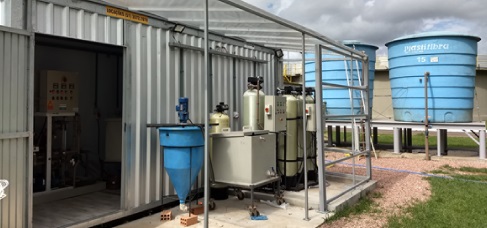
Fields of Activity
- Corrosion and metallic coatings;
- Polymers;
- New materials;
- Combustion;
- Technology adaptation;
- Process analysis;
- Thermal efficiency;
- Waste reuse;
- Ceramic and metallic materials, biomass, and industrial waste;
- Leather processing;
- Biomaterials;
- Materials simulation;
- Research involving Magnetic Materials and Composite Materials produced through Powder Metallurgy, as well as Renewable Energy;
- Development of wind turbines, solar modules, combustion generators, and hybrid power generation systems;
- Manufacture of rotating electrical machines such as motors, servomotors, and electric generators;
- Nanomaterials.
Professional Profile
Graduates should be able to:
- Conduct research in Materials Technology and Industrial Processes within the proposed research lines;
- Propose innovative materials, products, and processes;
- Work in applied research in industries and higher education institutions (HEIs) in the region and throughout the country, promoting interaction between academia and society;
- Develop technological solutions and promote the transfer of interdisciplinary knowledge to the industrial sector;
- Help companies adapt to technological change;
- Promote the competitiveness of the industrial sector by improving the quality of products and processes.
Selection Process
History
The Professional Master's Degree in Materials Technology and Industrial Processes was recommended by CAPES through Official Letter No. 086-12/2008/CTC/CAAIVCGAA/DAV. The Master's program was launched in March 2009, when teaching activities began. Since then, faculty members and the Office of the Vice-Rector for Research, Graduate Studies and Extension have invested in applied research to strengthen the program and establish it as a reference in professional master's education in materials.
The Master's program originated from activities conducted by researchers in the Materials Group, who sought to develop and characterize existing and new materials for products and manufacturing processes through research, meeting the region's technological demands.
The Master's Degree in Materials Technology and Industrial Processes was also established primarily to meet the Vale do Rio dos Sinos region's demand for a professional master's program that would encourage university–industry integration. As the program matured, this interaction expanded, enabling partnerships in other regions.
Thus, aware of its community role and shared responsibility for the social, economic, educational, and technological development of its region, and through its interaction with companies, the Master's Degree in Materials Technology and Industrial Processes seeks to meet the need for innovation and competitiveness through applied research. The program aims to make industrial processes more efficient by training qualified professionals.
Coordination Committee
Coordinator: Carlos Leonardo Pandolfo Carone
Deputy Coordinator: Daiana Cristina Metz Arnold
Faculty Representative (full member): Fernando Freitas Portella
Faculty Representative (full member): Claudia Oliveira
Doctoral Student Representative: Jonata Rocha Fett
Self-Evaluation Committee
Faculty Representatives: Carlos Leonardo Pandolfo Carone, Patrice Monteiro de Aquim, Daniela Müller de Quevedo e Daiana Cristina Metz Arnold.
Student Representative: Ramon Mendonça Teles.
Alumni Representative: Fernanda Pazini.
External Representative: Antonio Eduardo Martinelli.
Sandwich Doctorate
Overseas Sandwich Doctorate Program (PDSE/CAPES)
The Overseas Sandwich Doctorate Program (PDSE) aims to support the training of highly qualified professionals by awarding international research-placement doctoral scholarships to higher education institutions with doctoral programs recognized by CAPES. Research stays abroad should prioritize research in fields of knowledge that are less established in Brazil.
